

Is the Digital SAT Easier? How Adaptive Testing, Desmos, and Scoring Really Work
Everyone wants to know if the digital SAT is easier. While “easier” might not be the perfect word, “different” certainly is—and some of the biggest differences are huge wins for students. The key isn’t just that the test is on a computer; it’s that the entire experience has been redesigned to reduce two of the most common student complaints: fatigue and anxiety.
The most celebrated change is that the digital SAT is shorter—by a lot. The old paper exam was a grueling three-hour marathon, but the new digital version clocks in at just over two hours. That’s nearly an hour of testing time gone, which means less mental burnout and a better chance to stay focused through the final, critical questions.
Beyond the test itself, the waiting game afterward has been drastically cut. Instead of anxiously checking for scores for weeks, students now typically get their results in days. This change directly reduces the stress around tight college application deadlines, providing clarity sooner and offering more time for SAT preparation if a retest is needed.
How the New Reading & Writing Section Ends the “Long Passage Problem”
If you’ve ever felt your eyes glaze over during a long exam passage, this change is for you. The old paper SAT was famous for its lengthy, challenging articles, but the digital SAT eliminates them. Now, the Reading and Writing section is integrated, and every question is tied to its own short text—usually a single paragraph.
This new structure shifts the focus from reading stamina to direct comprehension. Instead of trying to hold the details of a long article in your head, your only task is to analyze the small piece of text on your screen. It’s less a test of speed and more a test of careful, focused understanding. Each question becomes its own self-contained puzzle.
For students who struggle with concentration or find long passages overwhelming, this is a massive relief. Breaking the test into small, manageable chunks helps reduce mental fatigue and allows you to give each question your full attention. This can be a major advantage and a big confidence-booster on test day.
The Built-In Calculator: Your New Best Friend on the Math Section
For many students, the most intimidating part of the old SAT was the “no-calculator” math section. On the digital SAT, that source of stress is gone. You now have access to a powerful, built-in graphing calculator for every single math question, from the first to the last. This isn’t just a basic four-function tool; it’s the full Desmos graphing calculator, integrated directly into the testing software.
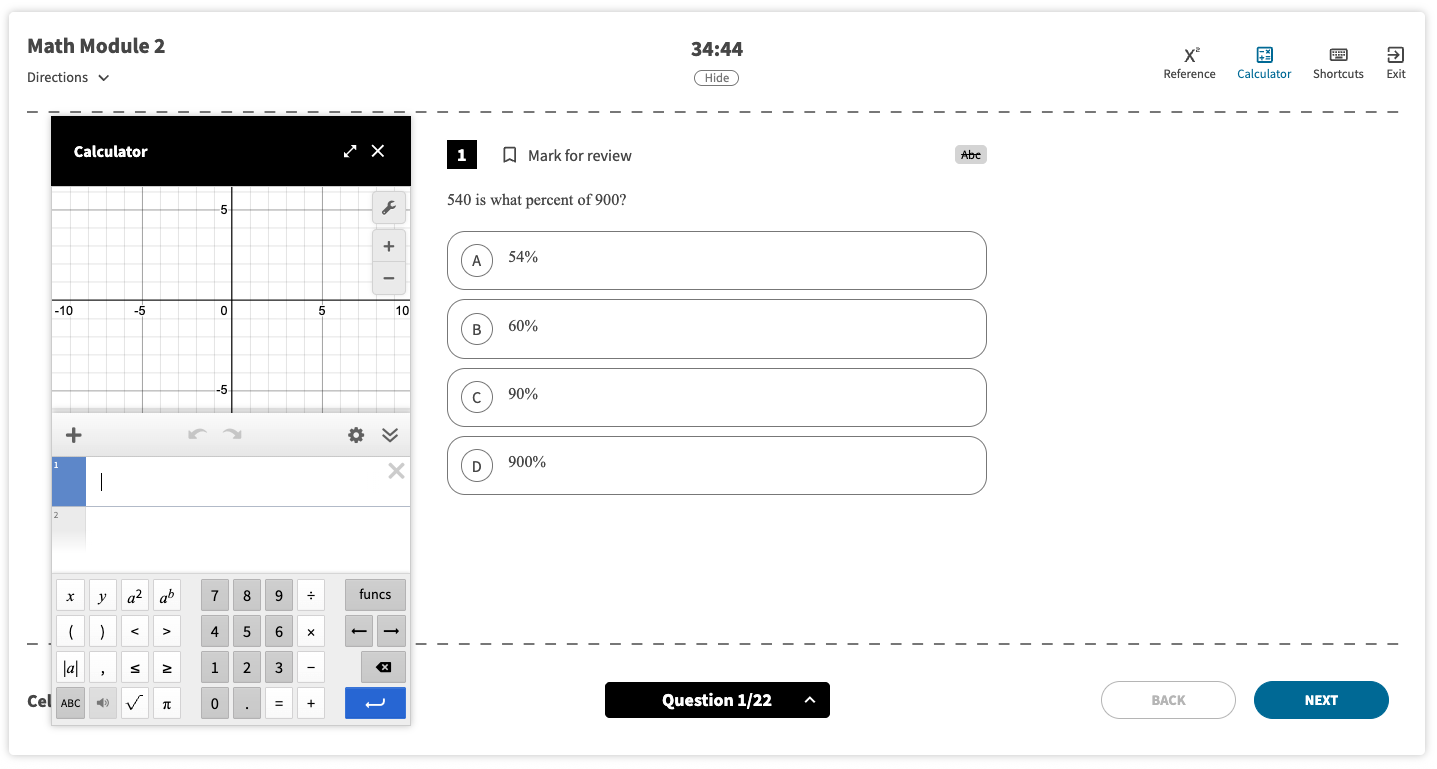
This completely changes the game for problem-solving. Questions that once required complex, multi-step algebra can now often be solved visually. For instance, instead of needing to isolate variables to solve a system of equations, you can simply graph both lines and find the point where they cross. This leverages visual reasoning skills and provides a powerful way to check your work, turning many tough problems into straightforward tasks.
Best of all, you don’t have to wait until test day to master this tool. The College Board’s free Bluebook™ application—the same software you’ll use for the actual exam—includes the exact same calculator. Practicing with it ahead of time removes any surprises and builds confidence.
The Big One: How “Adaptive Testing” Actually Works
The biggest change is that the test is now adaptive. Think of it like a video game that adjusts its difficulty. If you master the first level, the game presents a harder challenge. If you struggle, it gives you an easier one. The digital SAT works in a very similar way, tailoring the test to your performance as you go.
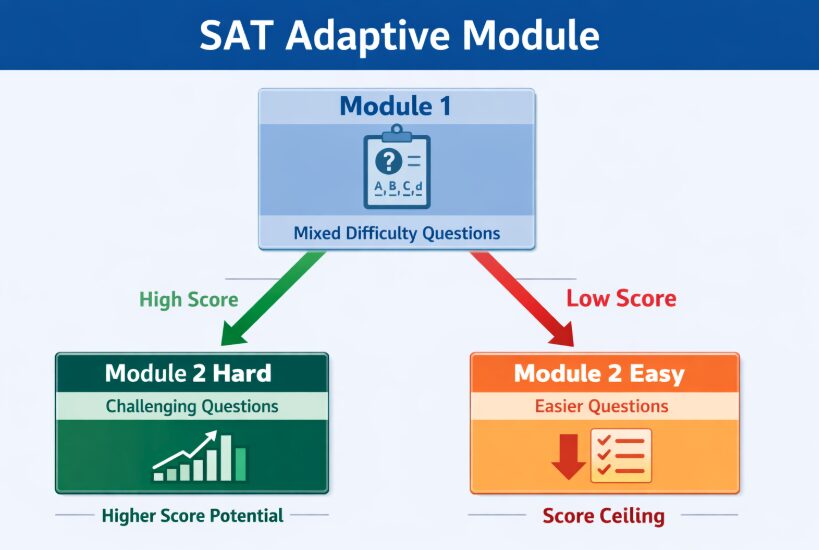
Each major subject—Reading and Writing, and Math—is now split into two parts, which the College Board calls “modules.” Everyone starts with the same first module for each subject, which contains a broad mix of easy, medium, and hard questions. This section establishes a baseline of your performance.
Here’s where the “adaptive” part kicks in. Based on how well you do on that first module, the testing software automatically selects your second module, which will be either more difficult or less difficult. This creates a personalized path designed to get a more accurate picture of your abilities in less time.
This system makes your performance on the first module incredibly important. Answering those early questions correctly is the only way to unlock the harder second module, which is where the highest scores are possible.
What Adaptive Testing Means for Your Score and Study Plan
This new adaptive format has a huge impact on how your score is calculated. If you perform well enough to unlock the harder second module, you have a path to earning a top score. However, if the system routes you to the easier second module, your score potential is effectively capped. Even a perfect performance on that easier set of questions won’t be enough to earn a score in the highest range.
Because that first module is your only ticket to the high-scoring questions, your test-day strategy has to change. A strong start isn’t just a confidence booster; it’s what determines your scoring ceiling. Accuracy and focus on these initial questions are now more critical than ever before.
To prepare for this reality, your study priorities should shift:
-
Master the middle: Focus on nailing easy and medium-difficulty questions to guarantee you see the harder second module.
-
Practice adaptively: Use the official Bluebook™ app for all practice tests to experience the two-module system and its timing firsthand.
The Final Verdict and Your Action Plan
While the official Bluebook™ app is essential for understanding the test interface, students need far more high-quality, realistic practice to improve their scores. The SAT Crash Course provides a practice environment that fully mirrors the real digital SAT.
Our platform uses the same adaptive module structure, includes the built-in Desmos graphing calculator, and replicates real test-day timing and flow. Most importantly, each test comes with detailed performance analytics, allowing students to clearly see their weaknesses and focus their prep efficiently.
In short, if you want practice that actually translates to test-day performance, this is where you should be practicing.