

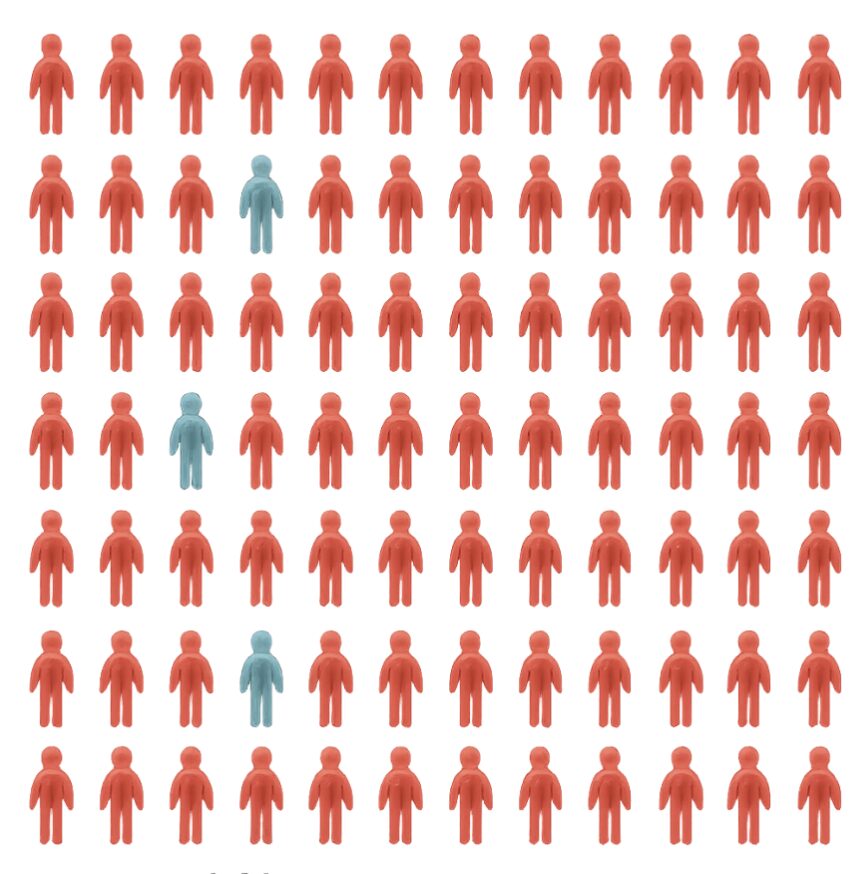
Every spring, headlines announce that it is harder than ever to get into an Ivy League school. Imagine 100 of the world’s brightest high school seniors applying to a top university; for the Class of 2029, data released by the schools shows that at places like Harvard and Princeton, only four would get in. This reality can feel discouraging for students and parents alike.
These record-low Ivy League acceptance rates, however, aren’t necessarily about a tougher standard. The real story is simpler: it’s about a much bigger crowd. This isn’t a sign that students aren’t good enough, but rather evidence of a fundamental shift in how many people are applying to college in the first place.
This guide provides clarity by breaking down the single biggest reason for these numbers—a historic surge in applications—and explaining what’s driving it. A calmer, more informed perspective on the low acceptance rate college landscape begins with understanding this trend.
What Are the Ivy League Acceptance Rates for the Class of 2029?
Every year, the big question is: just how hard is it to get into an Ivy League school? The answer lies in the acceptance rate—a simple percentage showing how many students are offered a spot out of every 100 who apply. A 4% rate means just four students were accepted for every 100 applications received, giving us a clear, if daunting, measure of selectivity.
Class of 2029 Ivy League Acceptance Rates Here’s the Class of 2029 Ivy League Acceptance Rates breakdown:
The Real Reason Rates Are Plummeting: It’s About a Bigger Crowd, Not a Higher Bar
Seeing acceptance rates in the single digits can make the entire process feel impossibly daunting. But the story behind these numbers isn’t about admissions officers suddenly raising the bar for what makes a great student. Instead, the real cause is a dramatic and recent surge in the sheer volume of applications. While the number of seats in the freshman class has stayed roughly the same, the crowd of students hoping to get in has exploded.
Compounding this effect is the sheer convenience of modern application platforms. With tools like the Common Application, students can send their profile to numerous schools with just a few extra clicks. The “what if?” application to a dream school like Princeton or Yale is easier than ever to submit, further ballooning the applicant pools and contributing to the trend of are ivy league acceptance rates declining
Does Applying Early Decision Actually Boost Your Chances?
For students who have their hearts set on one particular school, there’s an alternate path called Early Decision (ED). Unlike applying through Regular Decision (RD) with the rest of the crowd in the winter, ED applications are due much earlier, usually in November. The crucial difference, however, is that ED is a binding agreement. If a student applies ED and is accepted, they are committed to attending that school, withdrawing all other applications. It’s like a formal proposal to the university, signaling that they are, without a doubt, the student’s number one choice.
On the surface, the numbers revealed in data from the universities seem to provide a clear advantage. The Ivy League early decision vs regular decision rates can be dramatically different; a school with a 4% overall acceptance rate might accept over 10% of its early applicants. This statistical gap leads many to see ED as one of the few concrete strategies to improve ivy league chances. When faced with daunting odds, a rate that is double or triple the regular one can feel like a significant strategic edge.
However, this higher acceptance rate comes with an important catch. The ED applicant pool isn’t just a smaller version of the regular one; it’s often more competitive. It is self-selected to include many of the strongest applicants—those who have stellar records and are confident enough to commit to one school so early. Admissions offices appreciate this certainty, but it means you’re being compared against a smaller, more concentrated group of top-tier talent. The higher rate reflects the quality of that pool, not necessarily an easier path.
The SAT Advantage: Standing Out in the Class of 2030
As application numbers skyrocket, elite universities are searching for a reliable objective yardstick to identify top talent. In today’s competitive landscape:
“To increase your ‘distinguishability’ among top-tier candidates, achieving a higher SAT score is essential.”
In an era of significant grade inflation where a high GPA is no longer enough, a standout SAT score sends two powerful messages to admissions officers:
-
Competitive Edge: It provides a clear, numerical advantage that separates you from tens of thousands of other applicants.
-
Academic Validation: It serves as an objective proof of your academic strength, validating your GPA regardless of your high school’s grading standards.
What’s Next?
Ready to get started on your digital SAT prep? Sign up for The SAT Crash Course that will help you build your concept foundation. The course recommends you just the right lessons and questions to tackle, helping you improve fast. Start now!